The correct electrode depends on more than the metal in front of you: joint position, thickness, polarity, strength requirement, restraint and service conditions all affect the choice. By the end, you will be able to read an AWS classification, narrow the options by base metal and application, and check whether your electrode, machine and welding procedure are compatible.
Key takeaways
- Read the AWS classification for strength, position, coating, and current information.
- Match the electrode to the base metal and required weld deposit.
- Check welding position, material thickness, current type, and polarity.
- Confirm the qualified procedure, electrode condition, and supply conditions before welding.
Read the electrode classification before comparing products
AWS A5.1 classifications tell you an electrode’s strength class, permitted welding position, and coating/current characteristics. The “E” means electrode; “60” or “70” indicates a nominal minimum tensile-strength class of 60 or 70 ksi. These digits do not state yield strength, so check the product data sheet and qualified procedure for yield requirements.
| Classification | What it indicates | Typical selection clue |
|---|---|---|
| E6010 | 60-ksi class, all-position, cellulosic coating; generally DCEP | Deep penetration and pipe roots |
| E6011 | 60-ksi class, all-position, cellulosic coating; AC or DCEP | Penetration when the power source is AC |
| E6013 | 60-ksi class, all-position, rutile coating; easy arc and detachable slag | Sheet, light fabrication and clean appearance |
| E7018 | 70-ksi class, all-position, low-hydrogen iron-powder coating | Structural work where hydrogen control matters |
1. Read every character, not only “E70.” The final digit identifies coating and current characteristics, so E7018 is not interchangeable with another E70 electrode.
2. Confirm polarity against the manufacturer’s recommendation: E6010 generally uses DCEP, while E6011 supports AC and DCEP.
3. Treat opened E7018 as a controlled consumable. Follow the manufacturer’s exposure limit, rebake temperature and holding-oven temperature; an ordinary shop cabinet defeats its low-hydrogen purpose.
4. For low-alloy service, read the suffix. E7018-A1, E8018-B2 and E9018-B3 identify different alloyed weld-metal families, with separate preheat, interpass, heat-treatment and hydrogen-control requirements.
Match the electrode to the base metal and deposit
The electrode family must match both the base metal and the deposit you need. A mild steel electrode suits common mild and carbon steel work, but low-alloy steel, stainless joints, cast iron and wear repairs require more specific chemistry.
| Metal | Electrode family | When it fits |
|---|---|---|
| Mild steel | E6013 or E7018 | E6013 suits general fabrication and clean plate; E7018 suits restrained, thicker or code-controlled joints where low hydrogen matters. |
| Carbon steel | E6010, E6011 or E7018 | Use E6010 for deep penetration and pipe roots, E6011 for less-clean steel or field power, and E7018 for strong structural welds. |
| Low-alloy steel | Matching alloyed low-hydrogen grades | Use E7018-A1, E8018-B2 or E9018-B3 only when the base-metal alloy, preheat, interpass temperature and heat treatment procedure match. |
| Stainless steel | E308L, E316L or E309L stainless steel electrodes | Choose E308L for 304/304L, E316L for 316/316L, and E309L for many stainless-to-carbon or stainless-to-low-alloy joints. |
| Cast iron | ENi-CI or ENiFe-CI | Choose nickel for a machinable deposit; choose nickel-iron for higher strength and better restraint tolerance. |
| Galvanised steel | E6011 or E6013 after zinc removal | Remove zinc from the joint area, provide extraction and control fumes before welding. |
| Hardfacing repair | Wear-specific hardfacing electrode | Select for abrasion, impact, metal-to-metal wear, heat or corrosion; use a buffer layer when dilution or cracking demands it. |
Do not treat E309L as a universal dissimilar-metal repair electrode. Control bead size and cooling on cast iron, and remember that a very hard hardfacing deposit may resist abrasion but crack under impact or resist machining.
Use position, thickness, current and polarity to narrow the choice
A 4 mm electrode that works well in flat welding can be difficult to control in a root joint or on thin plate. Choose diameter from the joint position, access and thickness, then set amperage inside the electrode manufacturer’s range.
- Flat welding accepts larger electrodes and higher deposition rates. E7024 suits flat welds and horizontal fillet welds, but its heavy deposition makes it unsuitable for vertical, overhead or root-pass work.
- Horizontal welding permits more metal than vertical work, but gravity still limits puddle size. Use a diameter that maintains bead control.
- Vertical-up welding needs a smaller electrode and lower amperage so the puddle does not sag. It gives stronger control and penetration but takes longer.
- Vertical-down welding uses a quick, controlled puddle for suitable thin sections; do not use it for joints requiring deep penetration or heavy deposits.
For thin sheet, select a small-diameter electrode and the lowest current that maintains a stable arc. Thick plate can take a larger electrode and higher amperage, but a large rod can bridge the joint instead of controlling the root. Smaller rods improve access and reduce distortion, while adding passes and heat cycles.
Check polarity before choosing the rod. E6010 generally requires DCEP; E6011 runs on AC or DCEP. E7018 polarity depends on its specification, so follow the packet rather than assuming every E70 electrode is interchangeable. Use the machine’s actual amperage output, not its nameplate maximum.
Choose for the application, not only for the metal grade
Two electrodes approved for the same steel grade can produce very different results because joint access, position and service risk change the choice.
| Electrode | Choose it for | Limit or avoid it when |
|---|---|---|
| E6013 | Thin sheet, light fabrication and neat general-purpose work; useful for minor repair work | You need deep root penetration or a high-integrity restrained joint |
| E6010 | Open-root pipe welding and deep-penetration root passes, usually on DC positive | The job requires low-hydrogen control or the joint is poorly cleaned |
| E6011 | Outdoor welding and repair work where AC capability and a forceful arc help overcome imperfect conditions | You need the cleaner, lower-hydrogen practice expected by a code procedure |
| E7018 | Structural frames, heavy plate and pressure vessel welding where cracking risk, restraint or code qualification matters | Electrodes have been exposed to moisture or the procedure does not qualify them |
| E7024 | Flat or horizontal fillet welds on heavy plate when high deposition rate matters | The weld is vertical, overhead, a root pass or difficult to access |
E6013 is the practical choice for thin sheet because its smooth arc and readily detachable slag reduce burn-through and cleanup. E7024 saves time on long, accessible fillets, but its iron-powder coating is a poor match for positional work.
E7018 is a low-hydrogen electrode, not a complete crack-prevention system. Keep opened electrodes under the manufacturer’s stated holding or rebaking conditions; dry storage, clean steel, required preheat and controlled restraint still matter.
Verify the electrode, procedure and supply conditions before welding
Confirm the complete classification, storage condition, machine output and job procedure before striking an arc. A matching “E70” prefix alone does not prove compatibility.
1. Read the packet for the full AWS classification, electrode diameter, recommended amperage, permitted positions and polarity. Confirm the manufacturer’s instructions for DCEP, DCEN or AC welding electrodes; E6010 generally needs DCEP, while E6011 suits AC and DCEP.
2. Check storage before opening the box. Reject damp, damaged or unidentified electrodes. For opened low-hydrogen electrodes such as E7018, record the holding-oven temperature, permitted exposure time and any rebake temperature specified by the manufacturer or welding code. An ordinary shop cabinet is not controlled storage.
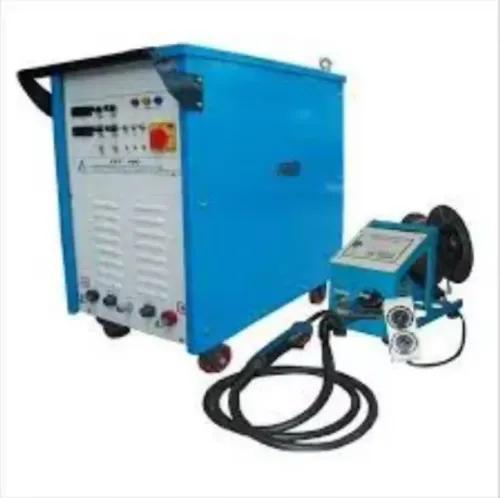
3. Set the machine from its nameplate and the packet range. Verify output amperage, duty cycle, selected polarity, lead connections and earth-clamp contact. Check the incoming supply voltage and phase; an overloaded extension cable can cause voltage drop, unstable arc performance and nuisance trips.
4. Read the approved WPS or job procedure for joint preparation, root gap, welding position, preheat, interpass temperature, pass sequence, travel direction and post-weld requirements. Confirm that the chosen diameter fits the root access rather than selecting the largest rod for deposition rate.
5. Before ordering, give Impex Engineering & Equipments Co the classification, diameter, quantity, machine type and WPS requirements; that prevents a catalogue match from becoming a site mismatch.
Make a short test bead on scrap of the same grade and thickness, then inspect arc stability, penetration, slag release and bead profile before welding the production joint.
Related product
 | Welding Cables And Hose Pipes Mild Steel Electrode Price And Quantity Minimum Order Quantity 10 BoxPrice Range 2700.00 - 3000.00 INR/Box Mild Steel Electrode Product Specifications Condition NewType... |
Frequently asked questions
What does an AWS welding electrode classification tell you?
It identifies the electrode type, nominal tensile-strength class, permitted welding position, and coating and current characteristics. In AWS A5.1, “E” means electrode, while “60” and “70” indicate nominal minimum tensile-strength classes of 60 and 70 ksi.
How do you match an electrode to the base metal?
Compare the electrode’s classification and product data sheet with the base-metal grade, required weld deposit properties, joint design, and service conditions. Check yield-strength requirements separately because the classification’s strength digits indicate tensile strength, not yield strength.
Which welding settings narrow the electrode choice?
Use the welding position, base-metal thickness, available current type, and polarity to narrow the options. Confirm that the electrode classification and manufacturer’s data permit the position and power-source settings you need.
Why should you choose an electrode for the application, not only the metal grade?
Joint access, welding position, thickness, required deposit properties, repair conditions, and service loads can change the suitable electrode even when the base-metal grade stays the same.
What should you verify before welding with an electrode?
Verify the electrode classification, product data sheet, qualified welding procedure, storage and condition of the electrodes, machine current and polarity, and the available supply conditions.