Clean TIG welds come from matching current type, heat control, tungsten, shielding and preparation to the metal in front of you. By the end, you will be able to compare machine specifications, choose settings for common metals and identify the causes of porosity, contamination and excessive heat.
Key takeaways
- Use AC for aluminium and DC for steel, stainless steel and copper.
- Choose tungsten size and current capacity to suit joint thickness.
- Set argon flow to protect the weld without creating turbulence.
- Clean the joint and remove oxide, oil, paint and moisture before welding.
How TIG welding produces a narrow, controlled weld
The TIG welding process creates a controlled arc between a non-consumable tungsten electrode and the workpiece. The arc melts a small area, while an argon envelope provides shielding gas coverage that keeps oxygen and nitrogen away from the hot metal. Add a separate filler rod only when the joint needs extra metal.
Clean and precise welding means low spatter, a stable arc, controlled heat input and a narrow bead. A visible, evenly shaped weld profile also makes undercut, porosity, lack of fusion and excessive reinforcement easier to detect.
| Metal | What changes |
|---|---|
| Stainless steel | Remove oil and oxide; use DCEN, controlled heat and a compatible stainless filler. |
| Aluminium | Remove its oxide layer; use AC, manage higher heat flow and select an aluminium filler. |
| Mild steel | Clean mill scale and rust; use DCEN, moderate heat and a suitable steel filler. |
| Copper | Remove surface contamination; use high heat input, often with preheat, and a copper filler. |
| Titanium | Use meticulous cleaning and strong argon protection; use DCEN, low contamination heat control and the specified filler. |
| Nickel alloys | Clean thoroughly; use DCEN, controlled heat and a filler matched to the alloy. |
The TIG welding machine must therefore match the metal rather than rely on one setting. Surface preparation, current type, heat input and filler rod selection determine whether the narrow bead becomes a sound joint or exposes defects.
Choose AC or DC before setting the torch
Choose the output and polarity before setting the torch. DC TIG with DCEN polarity is the normal choice for mild steel, stainless steel, nickel alloys, titanium and most copper alloys. Conventional aluminium and magnesium TIG require AC because the electrode-positive portion helps disrupt their refractory oxide films.
| Metal | Output and polarity | Reason |
|---|---|---|
| Mild steel, stainless steel, nickel alloys, titanium | DC TIG, DCEN | Stable arc and effective penetration |
| Most copper alloys | DC TIG, DCEN | Direct-current penetration suits the clean metal surface |
| Aluminium and magnesium | AC TIG | Electrode-positive time disrupts the tenacious oxide film |
A machine intended for several metals should offer both AC and DC. A DC-only source is unsuitable for conventional aluminium TIG work.
Treat AC balance and frequency as control settings, not quality scores. More electrode-negative time improves penetration and reduces tungsten heating; more electrode-positive time increases oxide cleaning but heats the tungsten and reduces penetration. Do not compare balance percentages between machines unless each manufacturer states whether the percentage represents electrode-negative or electrode-positive time.
AC frequency changes arc shape rather than simply increasing power. Lower settings produce a broader, softer arc, while higher settings produce a narrower, more directional arc for tighter access and a narrower apparent heat-affected zone. Extreme frequency settings increase arc harshness and tungsten loading, so maximum frequency is not automatically best.
Match machine controls and capacity to the workpiece
Choose a machine by its TIG amperage range, not its headline output. Compare maximum and minimum amperage, then inspect the TIG duty cycle: the percentage of a ten-minute period the source can deliver its stated current under stated test conditions.
A rating of 60% at 200 A is not equivalent to 60% at 250 A. Check the ambient temperature and whether each rating applies to AC, DC or both.
| Start type | Contact method | Main trade-off |
|---|---|---|
| HF start | Non-contact arc initiation | Reduces tungsten-transfer risk and start marks, but requires grounding and radio-frequency interference control |
| Lift-arc start | Tungsten touches, then lifts | Avoids radio-frequency interference, but can contaminate the tungsten or mark the start |
Foot pedal control lets you adjust live amperage as joint heat changes. For pulse TIG controls, compare independent adjustment of pulse frequency, peak current, background current and pulse width, then account for travel speed. A narrow pulsed bead does not prove lower total heat input if peak and background currents remain high.
Air-cooled torches suit simpler, lighter work; water-cooled systems handle sustained high current but add a cooler, pump, hoses and leak maintenance. Check the torch rating, duty cycle and polarity against the power source. A high-ampere machine can overheat an undersized torch.
Set tungsten, gas flow and preparation for each metal
Set the torch with the correct tungsten diameter and electrode type, then match cup size, gas lens, extension, polarity and flow to the joint.
| Electrode type | Best use | Limitation |
|---|---|---|
| Two-percent lanthanated | General-purpose AC and DC; non-radioactive | Requires a diameter suited to current |
| Ceriated | Relatively low-current welding and easy arc starts | Less suitable for high-current work |
| Pure tungsten | Older AC practice | Lower current capacity than many alloyed electrodes |
A gas lens improves shielding consistency and permits longer electrode extension for corners or recessed joints. Use a smaller cup for access and a larger cup for broader coverage, but increase flow only as needed.
Pure argon TIG gas flow of about 8–15 L/min suits manual welding of steel, stainless steel, aluminium and magnesium; adjust it for cup size, gas lens, joint shape and drafts. Use DCEN for steels, stainless steel and copper, and AC for aluminium and magnesium.
Prepare the workpiece before opening the arc:
- Degrease aluminium and remove oxide with a dedicated stainless-steel brush.
- Clean steel and stainless steel until oil, paint, rust and moisture are gone.
- Use a stainless steel purge on root-side stainless steel joints to prevent sugaring.
- Preheat copper when heat conduction prevents fusion; a larger torch or argon-helium mixture may also be necessary.
Check leaks, drafts, torch angle and excessive flow when porosity appears; turbulence can draw air into the shield. Set post-flow time at roughly one second per 10 A, with about 5–10 seconds as a practical minimum. Too little oxidises hot tungsten; too much wastes gas.
Use a buying checklist for reliable work across metals
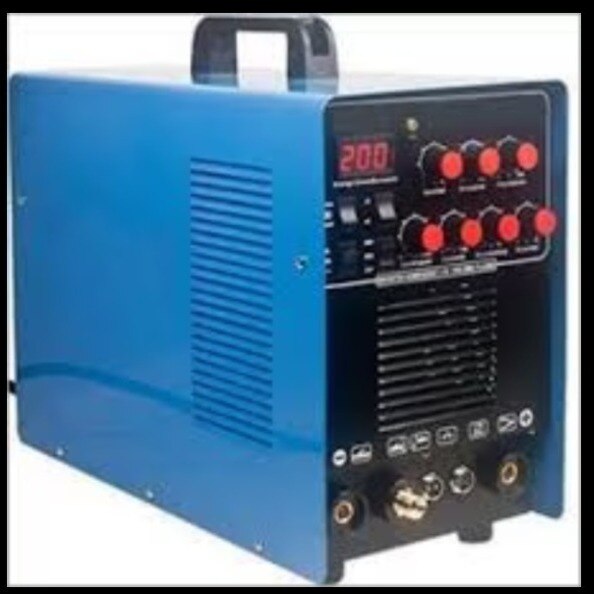
A reliable TIG machine selection checklist starts with matching the power source, torch and controls to every metal and thickness you will weld. Choose an AC/DC TIG power source with DCEN capability; AC is essential for conventional aluminium and magnesium, while DCEN covers stainless steel, titanium and copper.
- Confirm minimum and maximum current, stable low-current output for thin stainless steel or titanium, and enough high-current capacity for thick aluminium or copper.
- Ask how AC balance is defined, since “70%” is meaningless without knowing whether it means electrode-negative or electrode-positive time. Check the AC frequency range, pulse frequency, peak and background current, pulse width, HF start and foot-pedal compatibility.
- Compare duty cycle as a percentage of ten minutes at the same current, ambient temperature and AC or DC mode. A 60% rating at 200 A is not equal to 60% at 250 A.
- Match torch rating, polarity and cooling: air-cooled for lighter work; a water-cooled TIG torch for sustained high current, with its cooler, pump, hoses and leak maintenance.
- Specify a collet body, cup, gas lens, regulator and cables suited to the tungsten diameter and current range. For production stainless, add purge hardware, flow control and root-purge monitoring.
| Work requirement | Verify before purchase | Risk if missed |
|---|---|---|
| Thin stainless or titanium | Stable minimum current and pedal control | Burn-through or arc drop-out |
| Thick aluminium or copper | Maximum current, AC capacity and cooling | Undersized weld or overheated torch |
| Production stainless | Purge connections and monitoring | Root sugaring behind a sound-looking face |
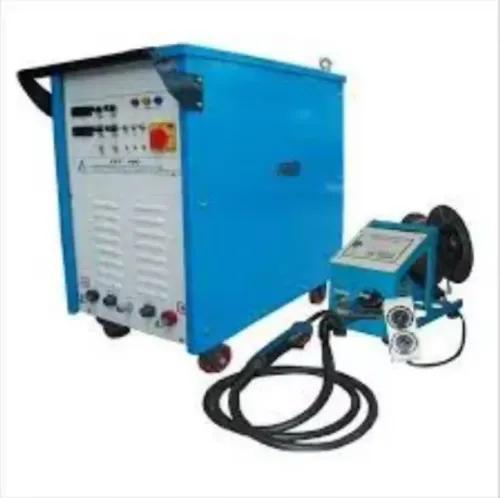
Give Impex Engineering & Equipments Co your metals, thickness range, AC/DC requirement, duty cycle, torch-cooling preference and site power conditions so an industrial TIG welding equipment supplier can configure the machine rather than quote amperage alone.
Related product
 | Welding Machines Tig Welding Machines Price And Quantity Price 1 INR/UnitMinimum Order Quantity 1 Tig Welding Machines Trade Information Supply Ability 1 Per DayDelivery Time 1 Week... |
Frequently asked questions
How does TIG welding create a narrow, controlled weld?
A non-consumable tungsten electrode creates the arc, while argon shields the molten weld pool from oxygen and nitrogen. Add filler rod only when the joint needs extra metal.
When should you choose AC or DC for TIG welding?
Use AC for aluminium and magnesium because its alternating current helps break through the oxide layer. Use DC for steel, stainless steel, copper and most other metals.
Which TIG machine controls and capacity should you compare?
Check the machine's amperage range, duty cycle, AC balance and frequency controls, pulse settings, torch rating and input power against your workpiece and available supply.
How do tungsten, gas flow and preparation affect TIG weld quality?
Select tungsten diameter for the welding current, keep the electrode correctly ground, set argon flow for the nozzle and joint, and remove oxide, oil, paint and moisture before welding.