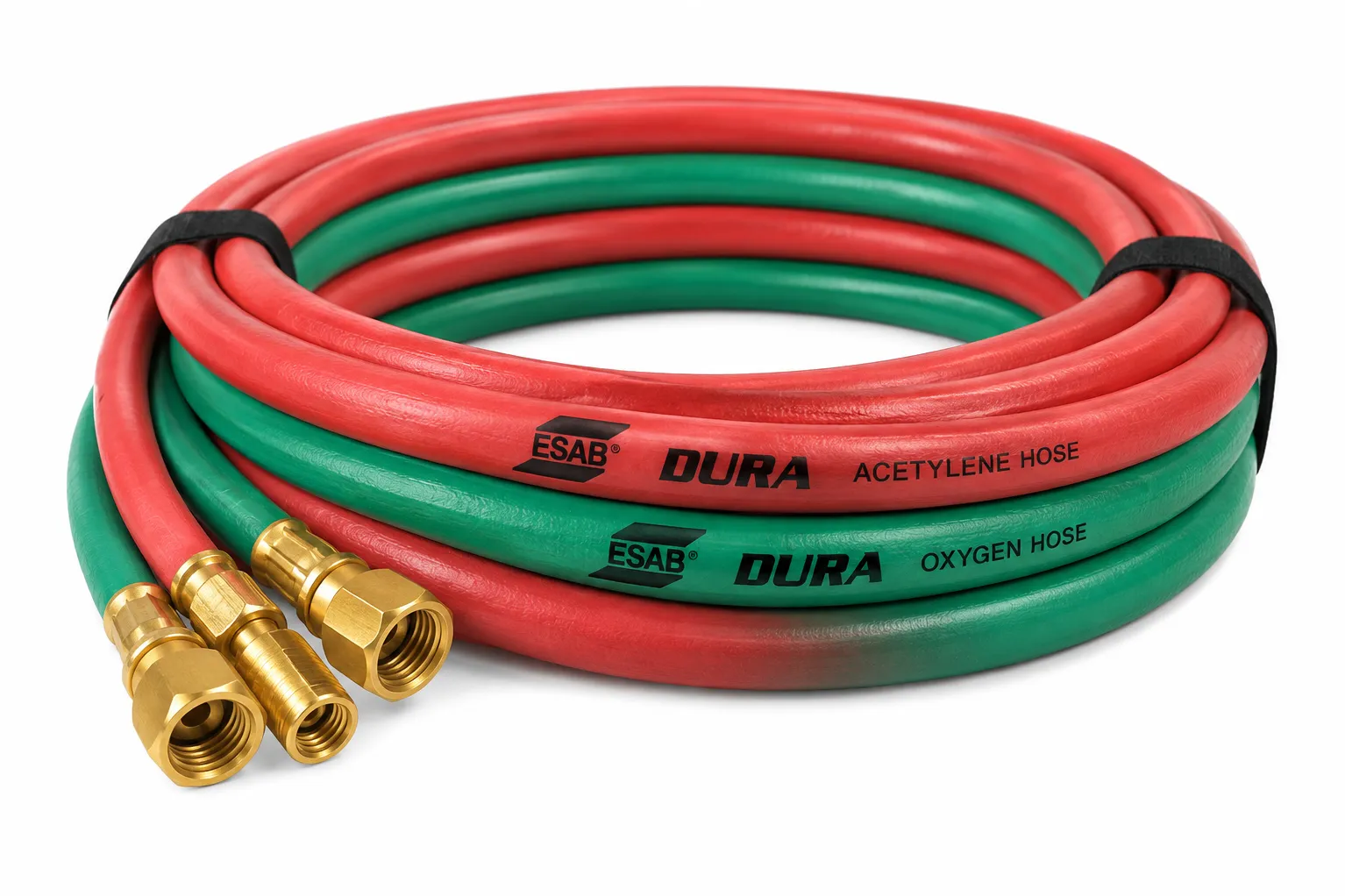
Gas cutting work depends on more than the torch and gas cylinders. The hose connecting the gas supply to the cutting equipment is also a critical part of the setup. An ESAB Dura Hose Pipe is used in welding and gas-cutting environments where gases need to travel safely from the regulator toward the torch.
For fabrication shops, engineering workshops and maintenance teams, understanding hose condition, routing and compatibility can help reduce avoidable problems during daily operations.
Why the Hose Pipe Matters
A gas hose may appear to be a simple flexible component, but it works within a system that requires controlled gas delivery. Damage, incorrect connections, poor storage or unsuitable hose selection can create operational concerns.
Industrial users should therefore consider the hose as part of the complete gas-cutting system rather than treating it as a low-priority consumable.
Important considerations include:
- Hose suitability for the intended gas
- Correct size for the equipment
- Flexibility during workshop movement
- Condition of the outer surface
- Secure connections
- Appropriate routing
- Protection from hot metal
- Regular inspection
These checks are particularly relevant in busy fabrication environments where hoses may be moved frequently.
Inspect the Hose Before Starting Work
Visual inspection is one of the simplest workshop practices.
Operators should look for cracks, cuts, abrasion, burns, flattened sections or other visible deterioration. Connections should also be checked to confirm that they are secure and appropriate for the equipment being used.
A hose that has been dragged across rough flooring may gradually develop surface damage. Similarly, contact with hot metal, welding spatter or sharp fabricated components can affect its condition.
Questionable hoses should be assessed before the equipment is put into service.
Keep the Hose Away From the Cutting Area
Good hose routing can reduce unnecessary exposure to workshop hazards.
Avoid running the hose through locations where vehicles, material trolleys or heavy components regularly pass. It should also be kept away from hot work areas wherever practical.
Excessive twisting and tight bends should be avoided because they can interfere with normal handling.
In fabrication facilities across Mumbai and Maharashtra, space can sometimes be limited. Planning the equipment layout before beginning cutting work can make hose management easier.
Storage Also Affects Hose Life
At the end of a job, hoses should not simply be left on the workshop floor.
Suitable storage helps protect them from oil, sharp objects, heat, excessive sunlight and accidental mechanical damage. Avoid tightly folding a hose into sharp bends.
Keeping welding and gas-cutting accessories organized also makes pre-use inspection easier because operators can quickly identify equipment that requires attention.
Use Compatible Equipment
A hose should be selected as part of the overall cutting setup.
The torch, regulator, hose connections and associated equipment must be appropriate for the intended application. Substituting components without checking compatibility can create unnecessary operational issues.
When replacing an existing ESAB Dura Hose Pipe, procurement teams should confirm the required specifications rather than purchasing purely by appearance.
Build Inspection Into Routine Workshop Practice
A useful approach is to include hose checks in the same routine used for torches, regulators, cables and other welding equipment.
Operators can examine the hose before work, monitor it during use and store it properly after the job.
For fabrication companies, contractors and industrial workshops in Mumbai, Maharashtra, these basic practices support safer, more organized gas-cutting operations. Good equipment management starts with recognizing that every component in the system matters, including the hose carrying gas to the point of use.
Keywords